How might we enable smoother integration of modems into residential environments, improving aesthetics and functionality without compromising on performance?
The idea
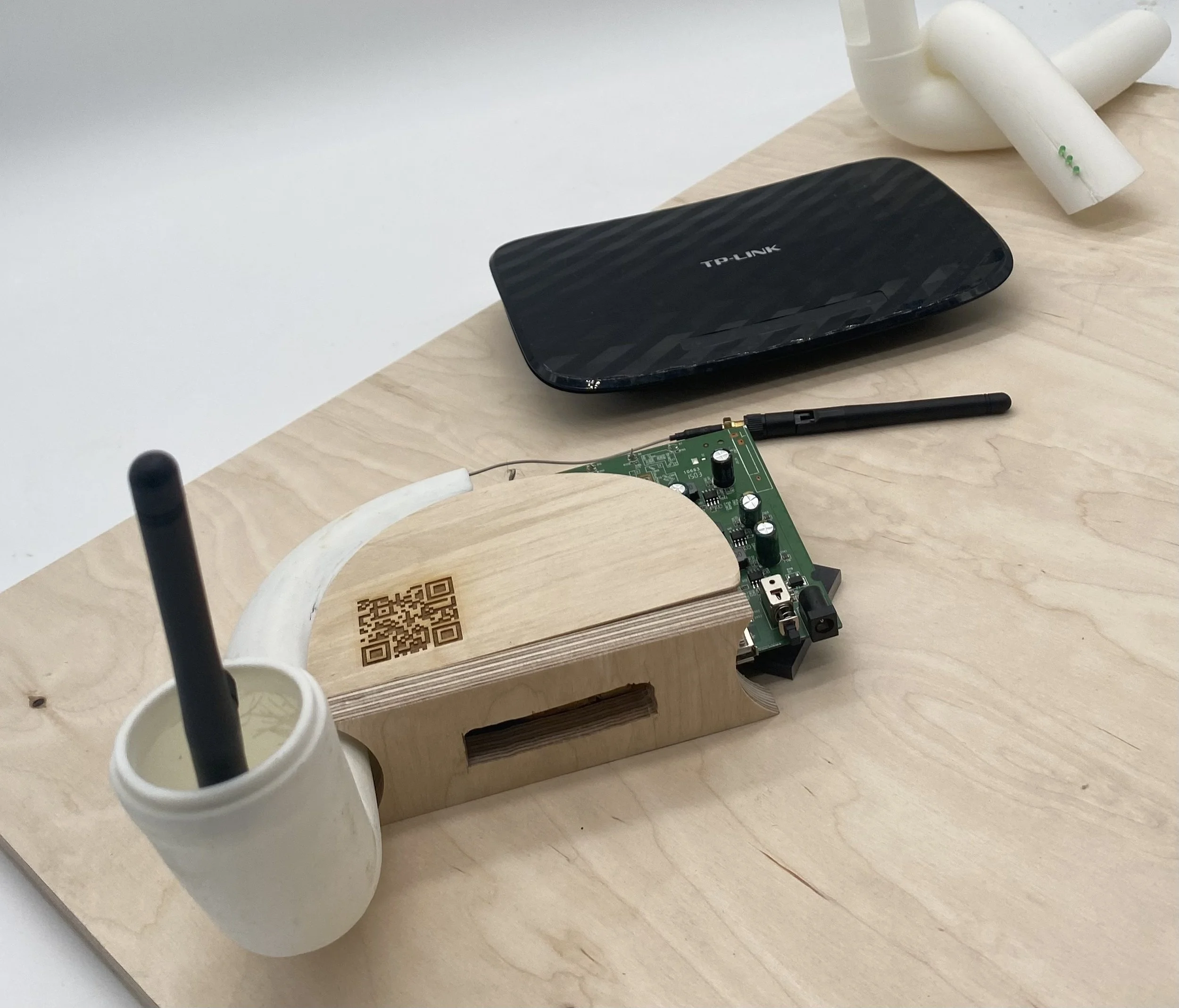
Integration of the modem’s electronic components into a piece of furniture, using the furniture’s structure to enhance the positioning and capacity of the antennas
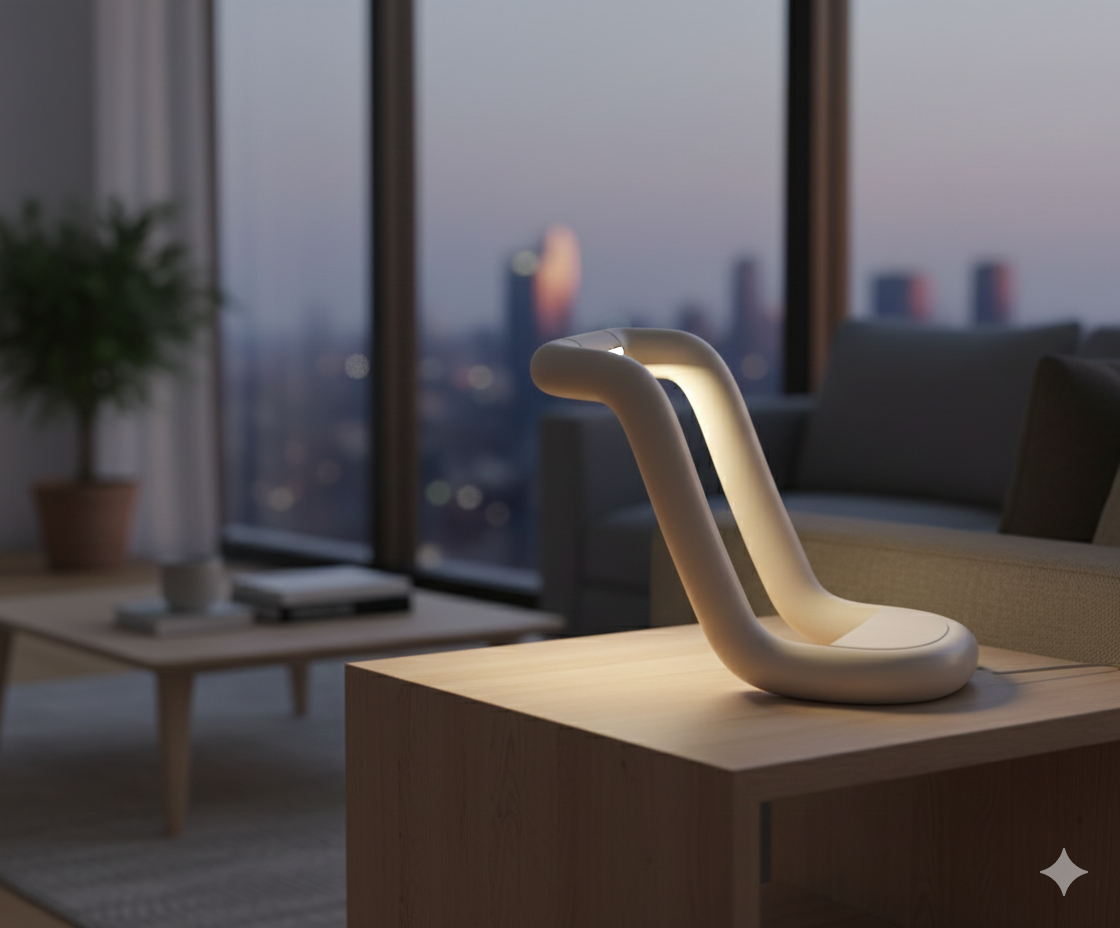
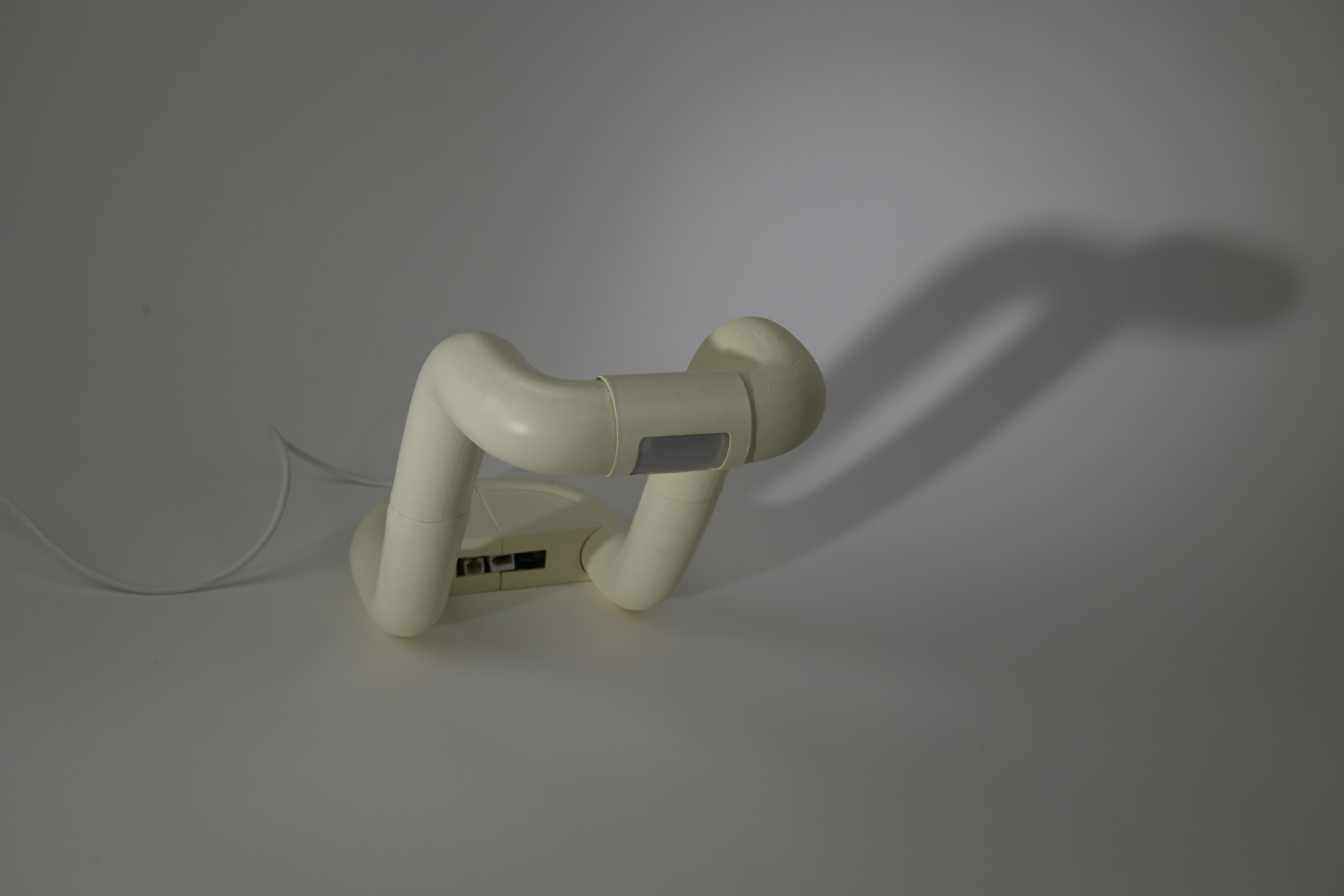
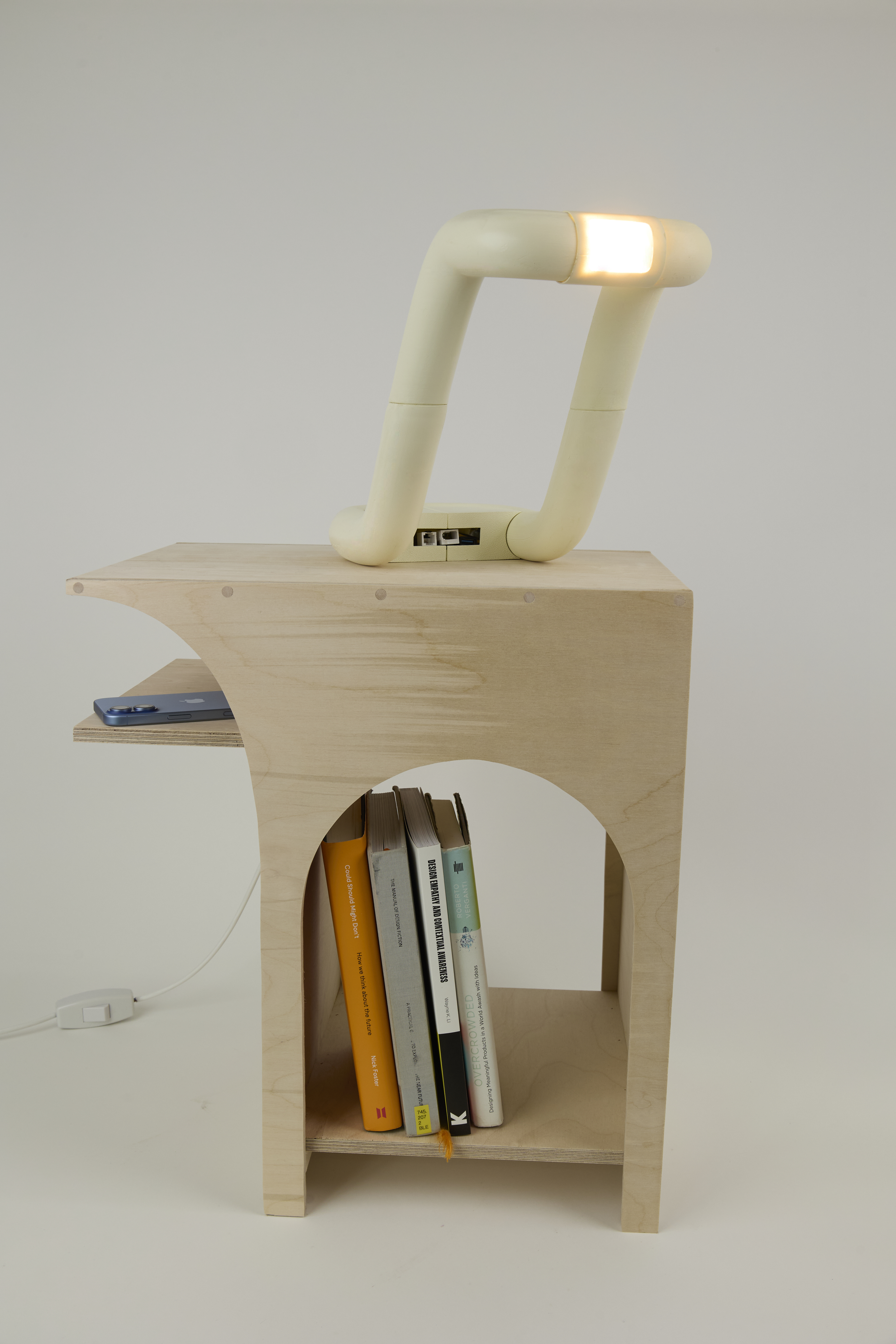
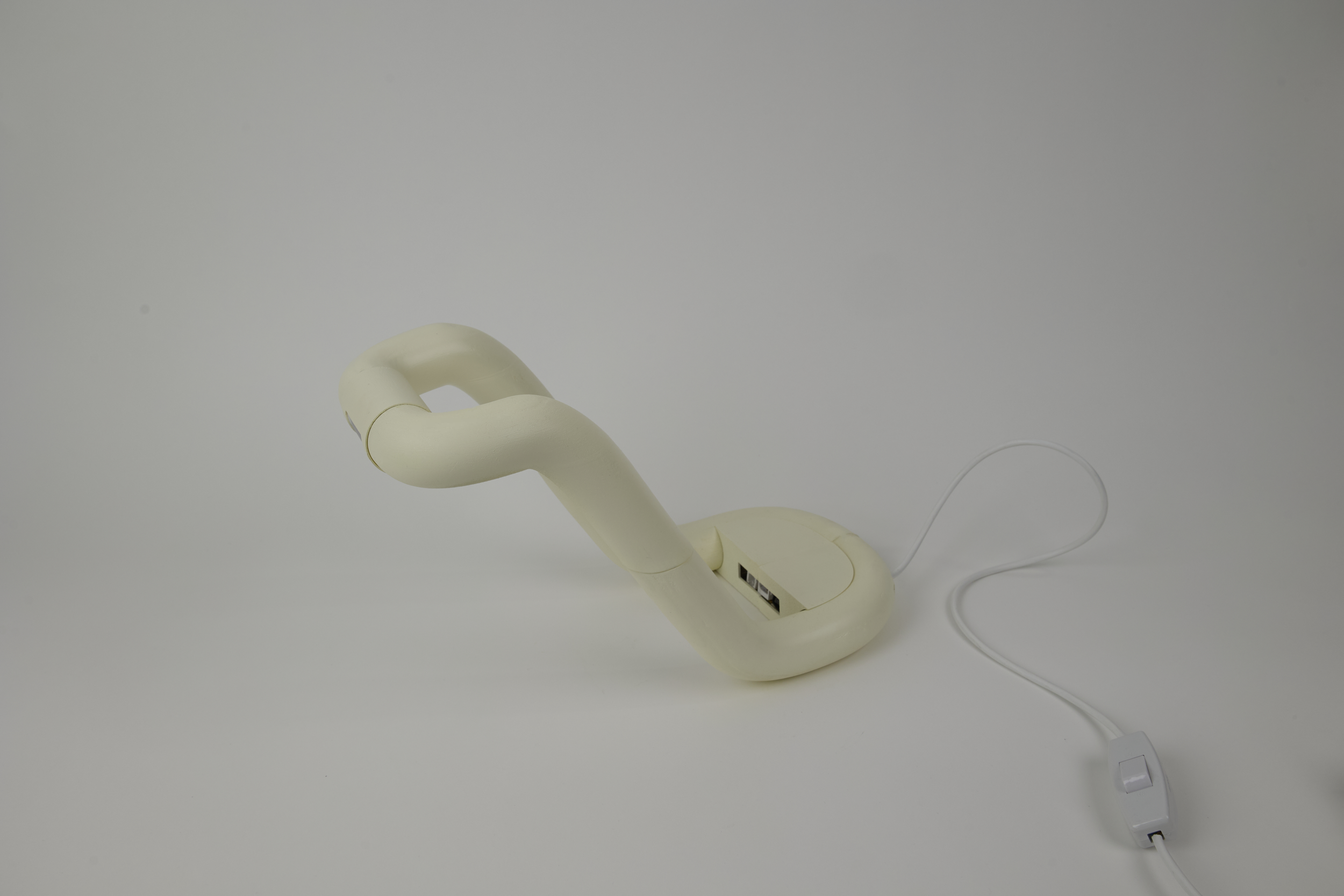
The rotatable head allows for precise directional lighting or soft, diffused illumination, making the lamp adaptable to a variety of domestic settings, from hallways and desks to cabinets, tight spaces, and corners.
Its spacious tubular structure is designed not only as a formal element but as a functional volume, accommodating larger antenna arrays with optimized horizontal and vertical angling. This enables stronger and more consistent WiFi signal coverage compared to conventional compact modems.
An openable compartment allows telecommunications providers to easily access and replace the circuit board (PCB) during upgrades or repairs. This means users can retain the lamp’s structure and antenna system over time, extending the product’s lifespan and supporting circular economy principles.
The oblique tubular form introduces diagonal geometries that are typically absent in residential interiors, giving the object a distinct visual identity and a subtle sculptural presence within the home.